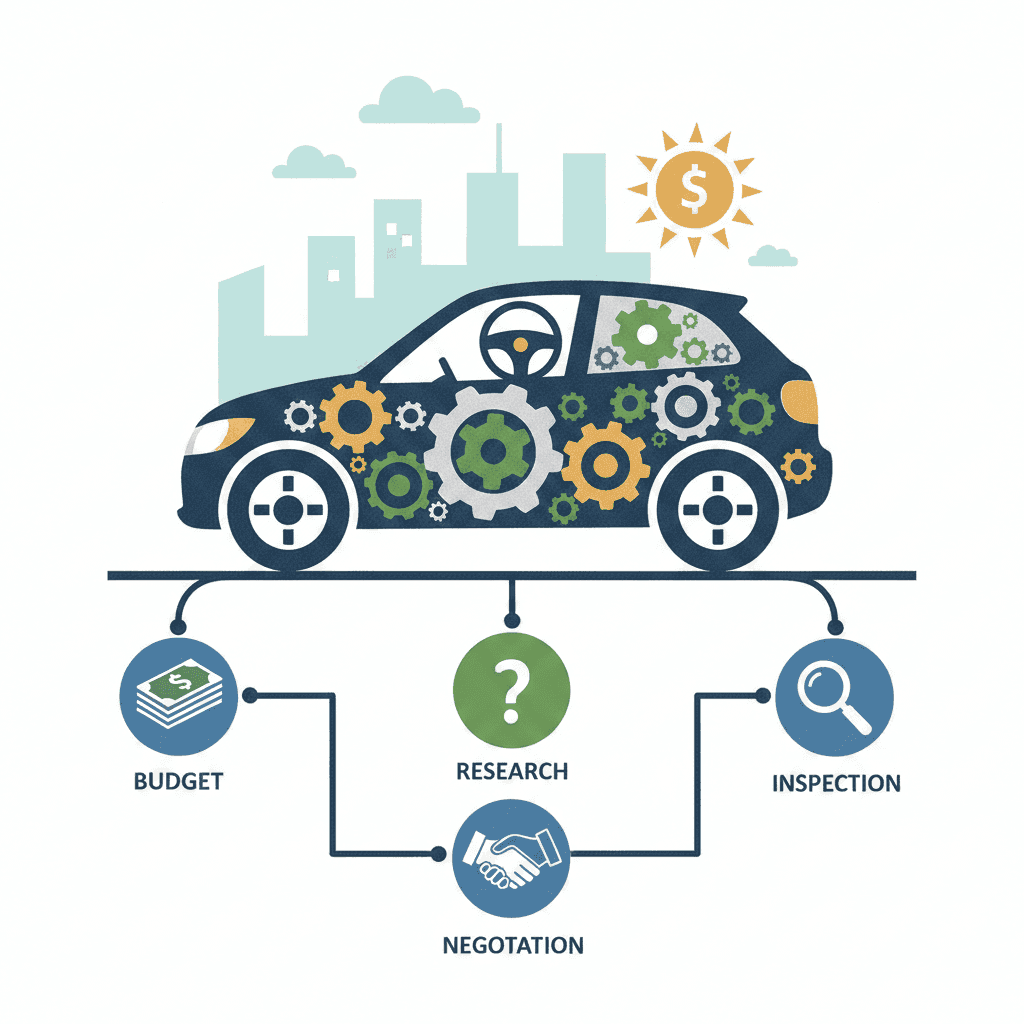
New Car Buying Advice
Buying a new car in Australia is exciting — but it’s also one of the easiest ways to overspend or end up with buyer’s remorse. Between dealership tactics, confusing finance offers, long option lists, and rapidly changing EV technology, it’s easy to make the wrong call.
This guide will help you:
- Choose the right car for your needs
- Negotiate the best possible price
- Avoid common mistakes that lead to regret
Step 1: Choose the Right Car (Before You Look at Prices)
The biggest mistake Australians make isn’t overpaying — it’s buying the wrong car.
1. Define Your Real Use Case
Ask yourself:
- Is this mainly city commuting or long regional drives?
- Do you actually need AWD or just like the idea of it?
- How often will you use the third row in a 7-seater?
- Do you tow? If so, how often and how heavy?
Be honest. Many buyers overspec “just in case.”
If you live in metro Melbourne, Sydney or Brisbane and rarely tow or go off-road, a medium SUV or hybrid may be far more practical (and cheaper long-term) than a diesel 4WD.
2. Consider Total Cost of Ownership (TCO)
The purchase price is only part of the story.
Look at:
- Fuel or electricity consumption
- Insurance costs (call for a quote before buying)
- Servicing intervals and capped-price servicing
- Warranty length (Kia and MG offer up to 7–10 years)
- Resale value (Toyota and Mazda traditionally hold well)
For example:
- A cheaper turbo petrol SUV may cost more in fuel than a hybrid over 5 years.
- An EV may cost more upfront but significantly less to run if you charge at home.
Think 5 years ahead — not just drive-away price.
3. Avoid Feature FOMO
Don’t buy a higher trim just for:
- Larger wheels (often worse ride comfort)
- Panoramic sunroof (rarely used)
- Cosmetic “sport” packages
Upgrade for:
- Safety tech (blind spot monitoring, rear cross traffic alert)
- Adaptive cruise control
- 360-degree camera (especially for larger SUVs)
These features improve daily ownership and resale value.
Step 2: How to Get the Best Price
Dealership pricing in Australia is negotiable in most cases — especially on non-limited stock.
1. Always Negotiate Off the Drive-Away Price
Focus on:
- “What’s your best drive-away price?”
Not:
- Weekly repayments
- Monthly repayments
- “How much can you afford?”
Dealers often shift the conversation to finance because it hides the true price.
2. Get Multiple Quotes
Email 3–5 dealerships with:
- Exact model
- Exact colour
- Exact trim
- Whether you’re financing or paying cash
Let them compete.
You’ll often see $1,000–$5,000 differences depending on stock levels and monthly targets.
3. Time Your Purchase Strategically
Best times to negotiate:
- End of month
- End of financial year (June)
- End of calendar year (December)
- When a facelift or new model is about to launch
Dealers have volume bonuses. If you’re “one more sale” at month-end, you have leverage.
4. Don’t Reveal Your Budget Early
If your budget is $45,000, don’t say it.
Ask for “Your best drive-away price.”
Once you anchor your budget, negotiations usually stop there.
5. Separate the Trade-In from the New Car Deal
Dealers can:
- Inflate trade-in value
- Inflate new car price
- Make it look like you’re getting a deal
Negotiate the new car price first.
Then negotiate your trade-in separately.
Better yet — get a written quote from CarSales Instant Offer or a wholesaler before you visit.
6. Be Careful With Dealer Add-Ons
High-margin items include:
- Paint protection
- Fabric protection
- Window tint
- Dash cams
- Extended warranties
Most of these are cheaper externally.
If you want them, negotiate them heavily — they often have 50–70% markup.
Step 3: Finance — The Hidden Profit Centre
Dealerships make significant profit from finance.
Before agreeing to dealer finance:
- Get a pre-approval from your bank or credit union.
- Compare the comparison rate, not just interest rate.
- Ask about balloon payments.
- Check if early payout penalties apply.
Low “1% finance” deals may:
- Remove discounts from the vehicle price
- Add fees elsewhere
- Apply only to certain trims
Sometimes paying a higher rate but negotiating a lower car price works out better.
Step 4: EV vs Hybrid vs Petrol — Don’t Rush
Australia’s EV landscape is changing quickly.
Before buying an EV, consider:
- Do you have home charging?
- Is your switchboard capable of supporting a charger?
- Do you regularly drive long regional routes?
- What is the real-world range, not WLTP marketing numbers?
Hybrids remain a safe middle ground for many Australian buyers who:
- Drive mostly urban
- Don’t want charging anxiety
- Want strong resale confidence
Avoid buying an EV purely for “future-proofing.” Buy it if it fits your actual driving habits.
Step 5: Avoid Regret After Purchase
Buyer’s remorse usually happens for three reasons:
1. You Bought Emotionally
Test drive competitors — even if you’re set on one car.
You might discover:
- Better ride comfort
- Quieter cabin
- Better infotainment
- Lower fuel consumption
Always compare at least 3 vehicles.
2. You Didn’t Test Drive Properly
During your test drive:
- Drive at highway speed
- Test rough roads
- Check seat comfort for 30+ minutes
- Test reversing and parking visibility
- Pair your phone and test infotainment
A 10-minute loop around the dealership is not enough.
3. You Ignored Running Costs
A cheap car that costs more to insure and fuel can become frustrating quickly. Calculate 5-year ownership cost before signing.
Step 6: Questions to Ask Before Signing
- What is the exact drive-away price in writing?
- What are the service intervals and service costs?
- When is build date?
- Is this MY25 or MY26 compliance?
- What warranty applies and are there conditions?
- Is there a cancellation fee?
Never rely on verbal promises.
Quick Checklist Before You Commit
✔ Compared at least 3 vehicles
✔ Got multiple dealer quotes
✔ Negotiated drive-away price
✔ Separated trade-in negotiation
✔ Compared finance externally
✔ Reviewed servicing and warranty
✔ Considered 5-year total ownership cost
✔ Test drove properly
Final Advice
The best new car purchase isn’t the cheapest.
It’s the one that:
- Fits your real lifestyle
- Has manageable running costs
- Was negotiated confidently
- Won’t feel wrong 6 months later
Take your time. Be methodical. Let dealers compete.
A car is a major financial decision — treat it like one.